

Hundreds of plates were filled with sustainably sourced burgers and pasta salad on the evening of Thursday, Aprill 11th.
The Oyster River High School (ORHS) cafeteria was bordered by tables of volunteer organizations, clubs, and a few individually dedicated students. Each group had assembled to share their new sustainable initiatives with the families attending the annual Sustainable Community Dinner.
Each of these sustainable perspectives were unique to those sharing them, including these six groups who all had different reasons they wanted the Durham community to recognize their initiatives.

ORHS Sustainability Club:
Informally known as Sus Club to ORHS students, the club was represented by a few members who were eager to share their current projects and the goals of the organization for the year. Some in attendance, who had taken part in planning the event, saw the value in educating their community on the importance of sustainability for high schoolers. Caitlin Lynch (’25) said, “[The community] has been super involved in what we’re doing, and they have a lot of really good feedback about what we’re doing. We’ll definitely take it into consideration.”
At the same table, Lynch and a few other Sus Club members were also representing Seacoast Students 4 Sustainability, a student-run nonprofit organized by members of different high schools in the seacoast area. “We have a fundraiser coming up on April 23 at Flatbread Pizza. We’re raising money for business expenses right now, like website and nonprofit status,” Lynch said.
ORHS’s Sus Club is currently operating a sustainability spirit week at the high school, which would not be possible without the support of the families in the community. Some days feature a donated clothing swap, sustainable transportation encouragement, and a Patagonia feature film.

Oyster River Middle School (ORMS) Sustainability club:
Three animated eighth graders represented ORMS’s Sustainability club with the intent to get middle school families excited by sharing their plans for Earth week. Club member Natalie Buck (’28) said, “It’s Earth week at the middle school next week, so we’ve been advertising that. We’re excited about the clothing swap we’re doing too, and wanted to get some of the community to know they can donate.”
They also displayed the work of the ORMS group, who’s goal is to help educate middle school students on making sustainable choices. Zottie Hale (’28) said, “That’s the poster that goes above our trash bins and recycling so kids easily know where to sort their stuff.”
Mast Way Sustainability Club:
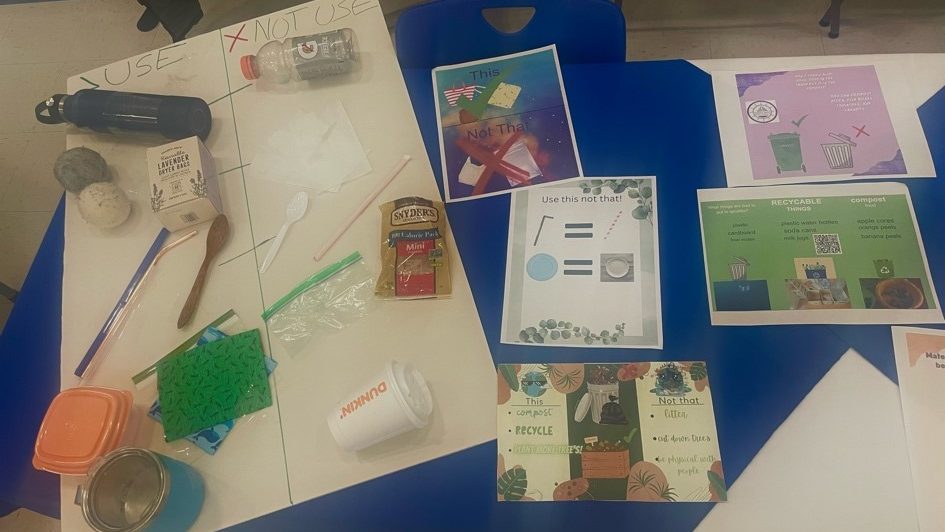
Sustainable choices are even being made at the elementary school level. Mast way elementary school fourth graders spent one recess a week during the school year to make posters about what they have learned. This table featured their basic approaches to sustainability, showing how easy it is to begin making these choices, like sorting your trash in the cafeteria.
Susan Leifer, club organizer and advisor, said, “They made posters to explain ‘use this instead of that’ with replacements for some things, or compost vs recycling, and they were excited to get their word out.”
Along with the projects presented at the community dinner, the fourth grade has also built sustainability into their science curriculum. The kids are currently working on an introduction to researching renewable energy. “The end goal is building a sustainable elementary school out of Lego with either hydro, solar, or wind renewable energy,” said Leifer.

UNH Sustainability Institute:
The reaction from crowd attending the dinner was appealing to the UNH sustainability institute representative Victoria Whitcomb (’27), UNH student. She hopes an increase in use of Cat Trax will follow. Whitcomb said, “A lot of people I’ve talked to so far didn’t know the program existed or said they thought it was only a UNH student opportunity. Parking and driving is notoriously awful for residents, too.”
The UNH sustainability institute arrived at the community dinner with an elaborate display of their recent project, the Durham Bikeshare program, Cat Trax. With this initiative, Durham community members have access to an app-based program with 30 bikes to lessen the traffic and increase sustainability values in the town and on campus.
Whitcomb said, “This was a way to get the word outside of UNH, as we partnered with the town of Durham, so the bikes are going to be available for students but also for community members. Anyone in Durham can use them for free.”
End 68 Hours of Hunger:
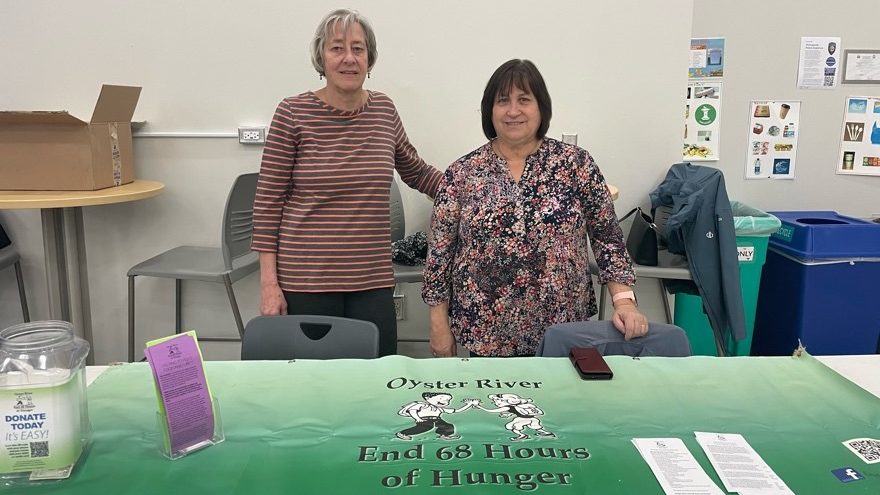
While this volunteer group isn’t exclusive to the Oyster River community, it’s still just as important to the district. Doris Demers, former ORHS nutrition staff member said, “Back in 2013 when we started, there was talk about whether or not it was a need here, but the first week we had 17 students sign up…. We’re currently feeding 47 students in the district.”
End 68 Hours of Hunger is a nonprofit organization, so all donations from the community go directly towards food for these students, who are fed and sent home with meals for the weekends. The organization is always appreciative of anything the community has to offer. They used the dinner as a chance to spread awareness that, with a little help from the community, food insecurity doesn’t need to be endured within this district. “We take donations, we have a Facebook page, End 68 Hours of Hunger, we have information about PayPal or writing checks,” said Demers.
Olivia, Fiona, and Diya Liu:
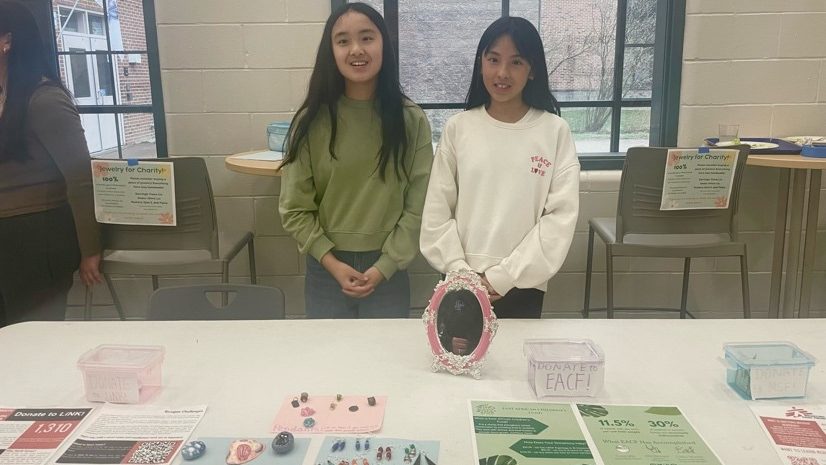
This table had a display of handmade jewelry and painted rocks and seashells, with two excited ORMS students proud to talk about their work. Fiona Liu (’28) said, “We are selling earrings, seashells, and rocks. We have charities listed that the buyers choose from like Liberty in North Korea and Doctors Without Borders.”
Not only were their pieces beautiful and unique, they represented the passion these girls had for something bigger than themselves. Olivia Liu (’29) said, “I recently read a book that got me interested in what Korean refugees are going through and we came across this charity. We just wanted to do something, so this is now our second event.”
The range of groups at the community dinner represented several different ideas and initiatives for making our district and town more sustainable. Children, college students, parents, and many other members all play a part in how our community operates. Fourth graders can teach us how to compost, UNH will provide the bikes, and we can make the difference together.
– Amelia Rury
 Mouth of the River
Leave a Reply