
There are 19 million abandoned places in the United States of America, according to “Abandoned Buildings and Lots” from Arizona State University. Some are dilapidated, inhabited by squatters, or under near-constant police surveillance. But despite these deterrents, we wanted to know the stories of the places we could explore.
Our fascination with the mysterious, alluring world of urbex (the act of exploring abandoned urban places) led us to contact Oyster River High School (ORHS) School Resource Officer (SRO) Mike Nicolosi, inquiring about nearby urbex opportunities. We weren’t expecting much help, but to our surprise, Nicolosi was eager to assist with our excursion.
So, the morning after Thanksgiving, while many people were out enjoying Black Friday deals, we met up with Nicolosi at the Durham Police Department. And alongside our friend Oliver Rodi, a student at Manchester Essex Regional High School, we set off in the police cruiser, excited to explore.
1
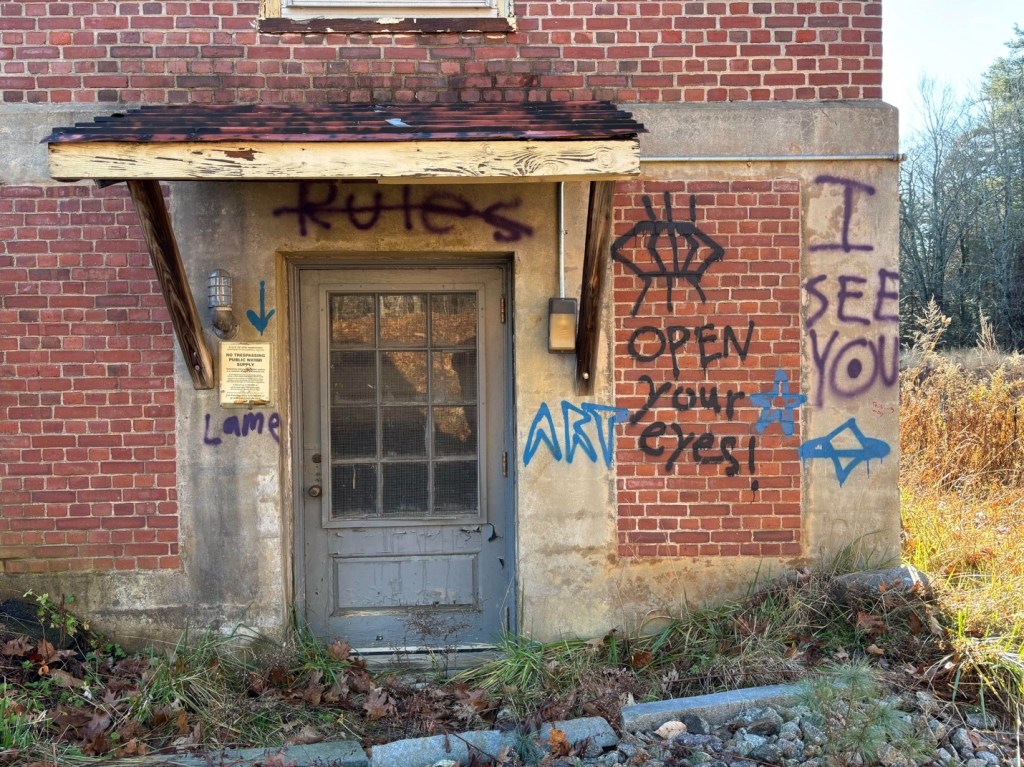
Graffitied front door of the abandoned UNH water treatment plant.
The first building we explored was an abandoned water treatment facility. We poked around outside the building until UNH Officer Kevin Haley, who Nicolosi had recruited for part of our journey, opened the front door with a key.
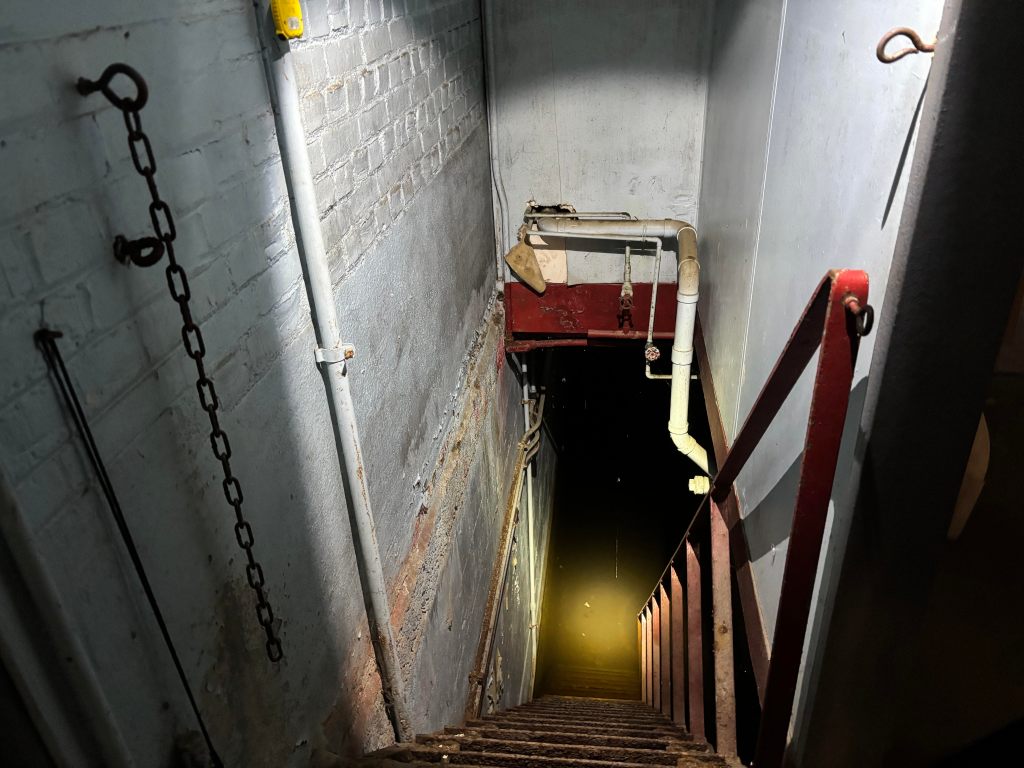
The complete flooding of the basement immediately made it clear it was abandoned.

Staircase into the basement.
The water was eerily still. A thin film of mold grazed the surface like a slimy dressing.

Lone chair at the end of the hall.
Walking through the building was incredibly unsettling. There were obvious signs that nobody had been working here for a long time. The hallways were covered in moldy carpets. Rusty bolts scattered out of a tool closet. Kitchen appliances likely contained every form of bacteria known to man. A drawer was derailed from its home cabinet, exposing its contents for the world to see.

Dismantled filing cabinet.

Warning signs scattered aimlessly across the floor of the records room.

Smith, Rodi, Nicolosi, and Haley peer into basement.
Signs from when the building was in use read “Escort required at all times,” but here we were, inside this building years after it closed, arguably more dangerous now.
We knew that somewhere near the treatment plant there was an old UNH fish hatchery.
As we explored the building, we came to the realization we were already there. We stumbled across thousand-gallon-open-topped tanks that years ago were likely homes to thousands of fish, that now housed rust and a dusting of soil.
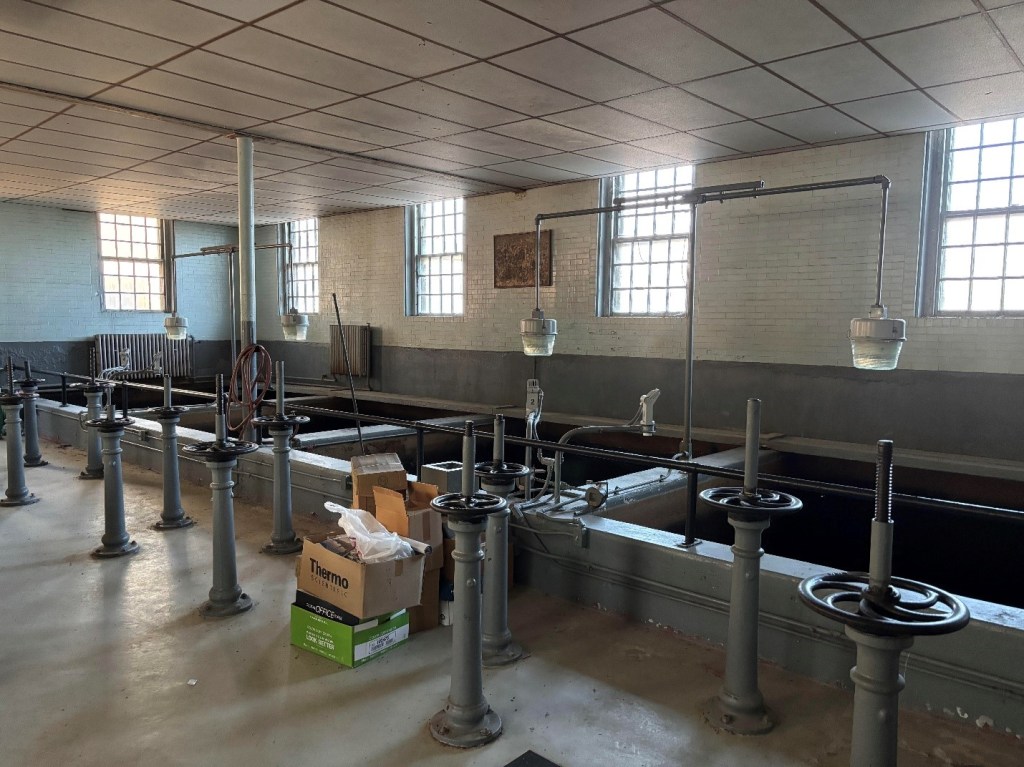
Thousand-gallon-open-topped tanks.
According to Nicolosi, the water treatment plant was shut down “because the building and system was old and lacked the necessary equipment to keep up with the demand at UNH.” He also explained that UNH built a new building, about forty times larger than the original.
2
Our second destination was the Kingsbury farmhouse. Haley deactivated the gate, both police cruisers rolled through, and the officers confirmed safe entry. If not for the shuttered windows, you could picture a family of eight living peacefully within its walls.
We pushed through the overgrown bushes that were well equipped with prickers. They stood silent but stern, like bastions of this crumbling home.

Kingsbury farmhouse.
Entering the farmhouse, we turned corners half expecting an unwanted visitor to appear. Carefully we navigated dim-lit, dilapidated rooms. The ceiling had peeled off onto the ground and covered nearly every inch of velvet carpet.
What we came to discover today is that old farmhouses make absolutely no sense. The layout of the building was extremely inconvenient for its inhabitants. Closets were the size of small rooms. The hallways were long and winding. Staircases were everywhere, but they all lead to the same places.

Haley discerns the remnants.
Perhaps the least conventional part of this house was that it was split in two. A newer addition had recently been added, requiring us to cross a near hundred-foot hallway to reach it. The addition featured a wider, more open style than its older counterpart.
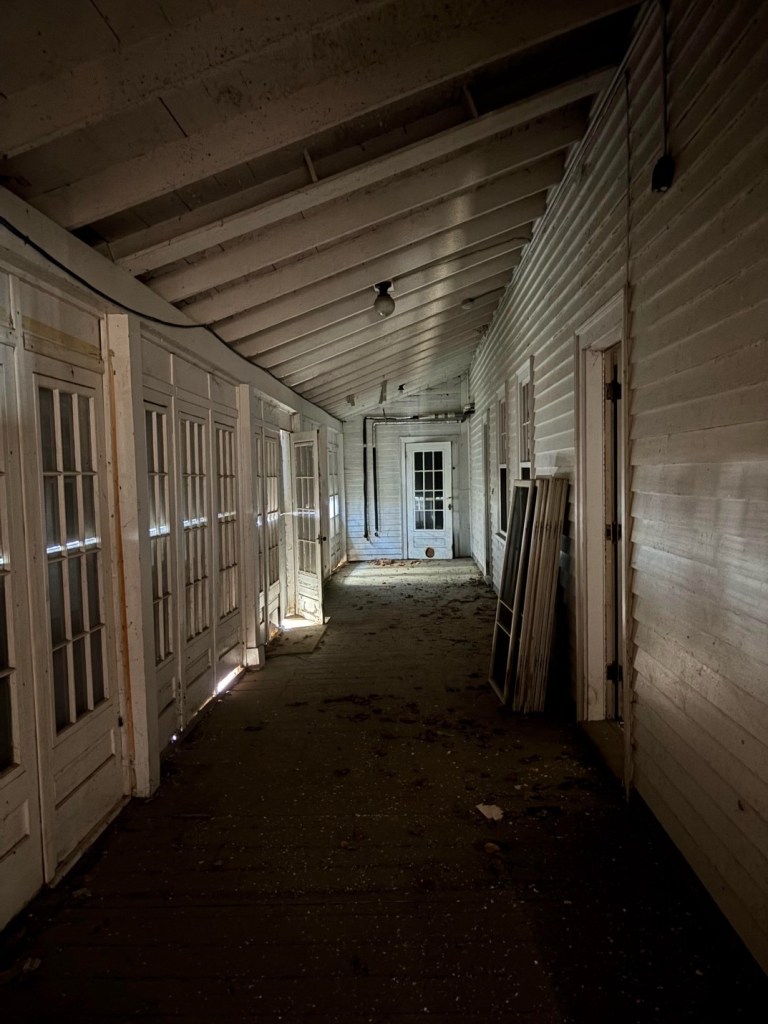
Hallway bridging the original house and its later added extension.
Venturing to the second and third floors of this building brought upon new risks. The house seemed to shudder with every step we took, the old floors aching and groaning under our unwelcome weight. Every time we climbed a stair, we prayed we wouldn’t be the last ones to do so.
3
Our third destination was the Edgerly house.
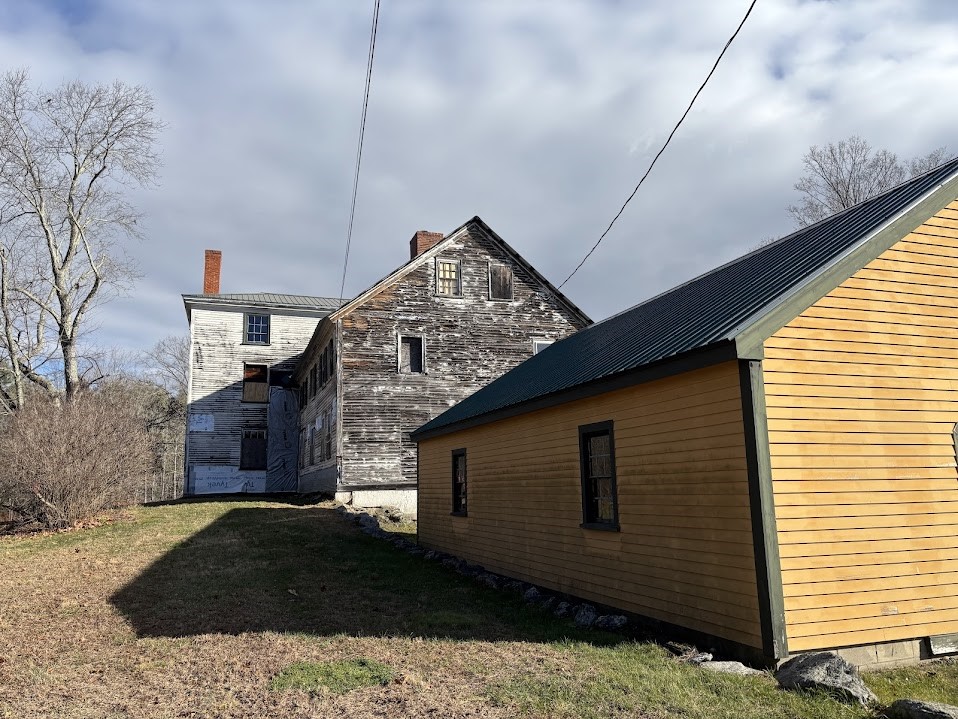
Edgerly house from the parking lot.
But when we arrived, something seemed off.
While the building was supposedly abandoned, noises of power tools and chatter emanated from inside. There were mixed reactions within the crew. Rodi was thrilled with the idea of running into someone, whereas Nicolosi was visibly tense, with the thought of potentially stumbling in on a squatter. Nicolosi instructed us to stay back from the door, as he approached with the trademark line:
“Durham PD, who’s in there?”
Griffin Hotz, Portsmouth Christian Academy alum, answered the door. He had a friendly face and a contagious smile. Hotz explained that he was renovating the property, working as a restoration carpenter with a company in Stratham.
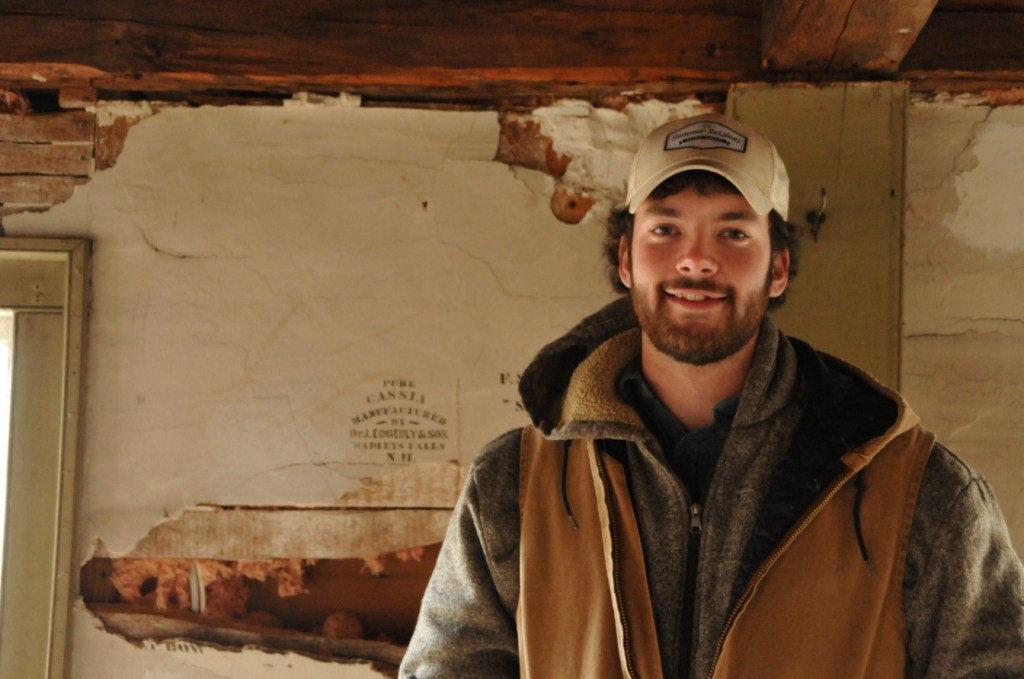
Hotz stands beside a Cassia manufacturer stamp.
Seeing as Hotz was no threat, we asked for a tour.
The house maintained the farmhouse stereotype we experienced at the Kingsbury house. Winding hallways, unnecessarily low ceilings paralleled sky-high ceilings over the next room, and of course, the newer edition to the home that was very out of place.
While they may not be practical, there is something to be said about the charm of these old houses. Hotz said it best: “[These abandoned places] really remind us that we’re a part of something that dates back to more than just our current time and so it helps us zoom out on life which is so valuable these days.”
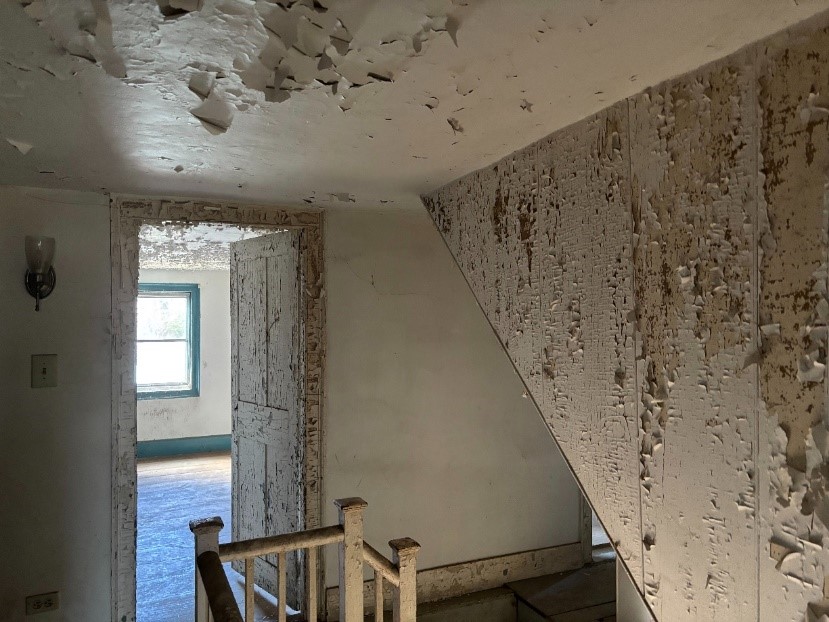
Light streams through the window illuminating peeling paint on the second floor.
We asked Hotz if he knew anything about the history of the house, and surprisingly, he was very knowledgeable. “This house was owned by three important Lee families that all had connections to the mills, most important being Isaiah Edgerly,” Hotz told us. “He ran a mill that made little pharmaceuticals. If you go in the basement there is a bunch of shelving and storage from when he had it.”
Unfortunately, in 2011, the house fell victim to an arson attack by the previous owners, who had fallen into debt and were unwilling to let the bank repossess the house.
Hotz has done much of the restoration since, but it’s still a serious project to undertake. “[This renovation is] a definite process and it’s going to take me the rest of my life, but I’m excited about it,” he says.
4
Our fourth destination didn’t come from research, but from the side of the road.

Abandoned Williams barn from across the yard.
As we were passing through Lee, Rodi was looking for potential places to explore with peeled eyes. This led us to pull into a random driveway in the police cruiser.
We knocked on the door and were greeted by a confused but friendly woman. When we asked if we could go explore the building, she seemed hesitant at first. While she didn’t say it, her expression read:
“Who would want to go in there?”
It was no secret that the old mill had seen better days. She explained to us that she had tried to secure the silo with cables and ropes—to no avail—and that the rest of the property wasn’t doing much better. Because of this, she advised that we should not go inside.

Twisted silo against the barn.
Nicolosi stopped abruptly as we approached the barn. In a low whisper, he urged us to stop moving. Rodi, oblivious to this, kept marching forward. This forced Nicolosi to raise his voice just enough to catch Rodi’s attention.
Up in the window, above the crest of the old silo, roosted a vulture. Everyone gazed in awe, mouths agape, as none of us had ever been this close to such a huge bird before. Even more surprising was the second vulture, nestled in between the branches of the nearby tree. It appeared that this property might still be in use after all.
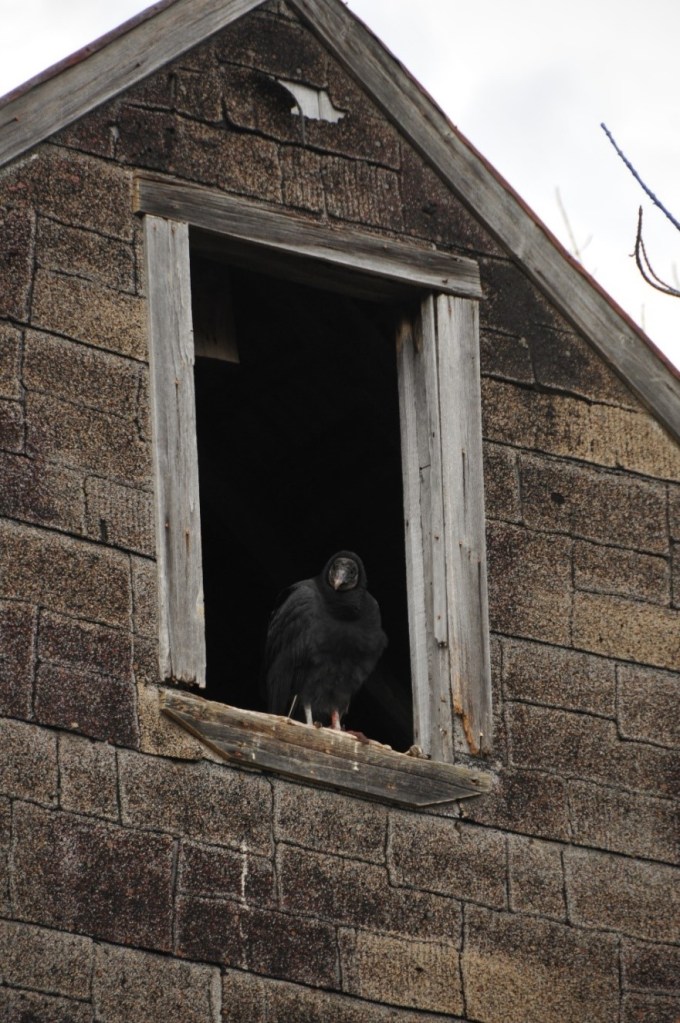
Vulture perches in the window of the barn.
5
Our fifth destination was the Madbury Properties. The final leg of our journey required us to take a short walk into the woods, where sullen houses lined the sides of the path.

Hilfiker, Rodi, and Nicolosi venture into the woods.
There was something eerier about these properties in comparison to those we visited earlier.
These buildings were by far the most decrepit we had seen, characterized by their heavily vandalized exterior alongside crumbling walls and a seemingly infinite amount of broken glass. This was the only place where Nicolosi seemed on edge, clearing rooms like a one-man SWAT team. He was keeping an eye out for squatters.

Graffiti-faced abandoned office buildings.
While our journey had been mystical up to this point, we had only visited gated and surveilled buildings. Each entry before now had required multiple keys to bypass fences and doors. But these buildings had been discovered for a few years now, leading to the destruction of the properties due to irresponsible explorers. “At one point, I think it was a farmer’s market, at another point, it was a dry-cleaning business,” recalls Nicolosi.
Remnants of the past have been scattered across the floor of these once-office buildings. Phones, copper wire, and various other items common in a modern functioning workplace were left in complete disarray.

Nicolosi scours the premises.
Graffiti covered this place. While oftentimes graffiti is seen as an art form, at its core it’s vandalism. Crude drawings, slurs, and several different depictions of male genitilia were plastered across these buildings.
Rounding off our journey here was very eye opening to the damage that can be caused by human intervention.
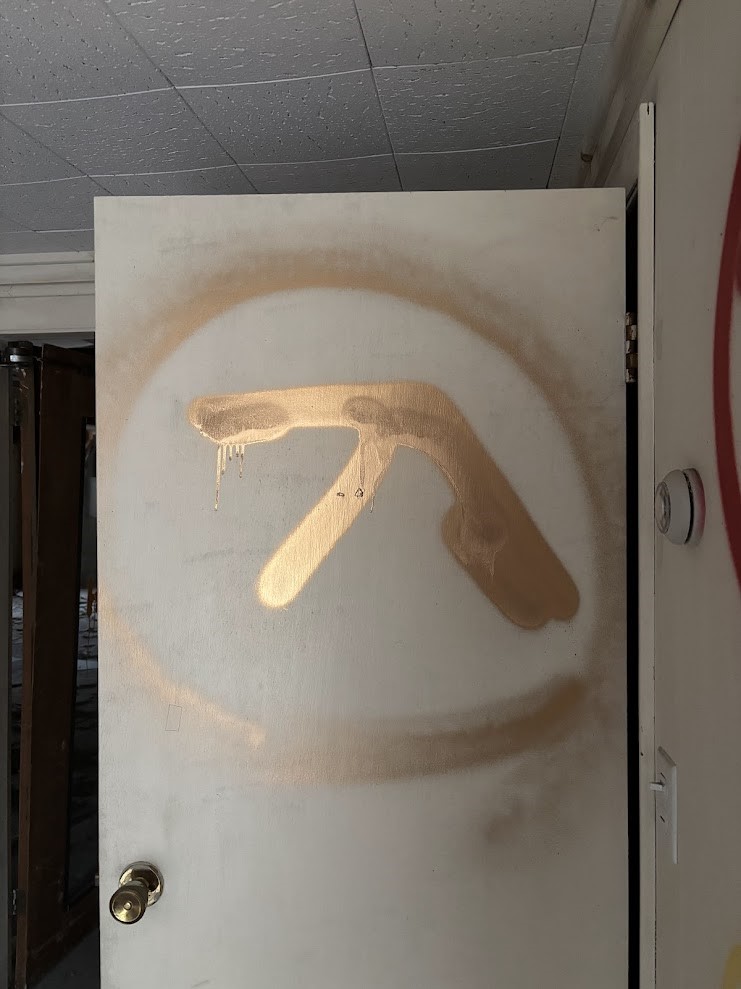
Electronic music producer Aphex Twin’s symbol.
6
Whether it be a house, office, mill, or barn, exploring abandoned places allows for a glimpse into the past, untouched by the progress of mankind. “[The experience] feels kind of like a step into another world,” says Rodi.
We encourage anyone interested in urbex to seek out new places to explore. “If you want to [explore] the right way, just ask permission and explain why you want to be there,” says Nicolosi. To that end, always remember this advice:
“Take nothing but pictures, leave nothing but footprints.”
—Ulysses Smith MOR & Ian Hilfiker MOR
with contributions from Officer Mike Nicolosi, Officer Kevin Haley, & Oliver Rodi



 Mouth of the River
Leave a Reply