
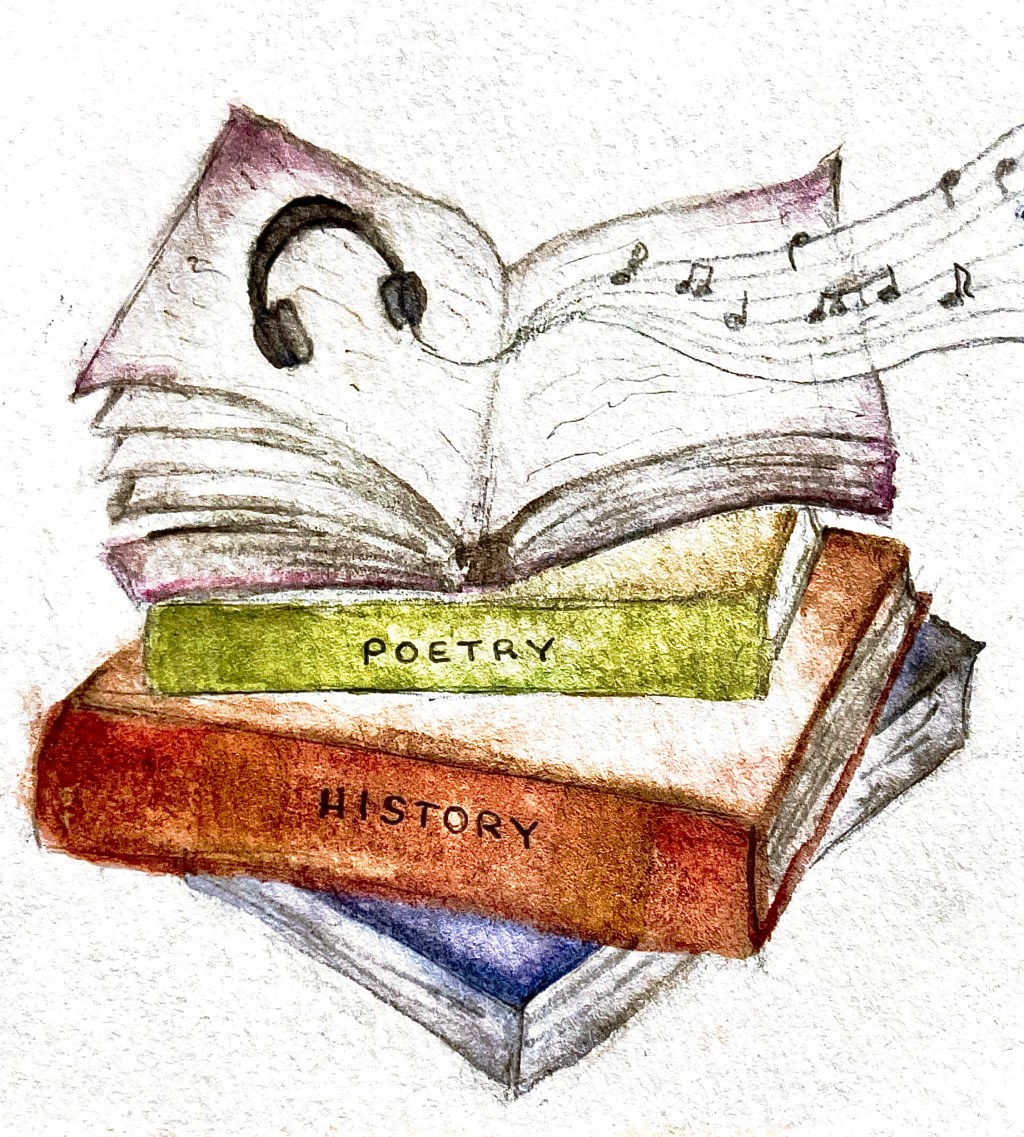
Many people may not realize how civil rights movements in the 1970s Bronx connect to Kendrick Lamar’s Superbowl halftime show, but for the seniors taking the new Contemporary American Poetry (CAP) class, it’s a hot topic.
The new rap class at Oyster River High School (ORHS) only open to 12th graders, is offering students the unique opportunity to explore the historical roots and thematical concepts of the music genre that dominated many ORHS students’ Spotify wrappeds this winter.
According to the ORHS Program of Studies, the purpose of this class is to investigate the origins of rap music, one of America’s most iconic art forms. The goal is for students to better understand the genre in terms of its artistic continuity and more importantly, how it fits into the larger picture of English literature.
The idea for this class was sparked, in part, by student request and brought to reality by Alexander Eustace, an English teacher and rap fanatic at ORHS. “We’re really trying to expand our conceptions of literature and our thinking about rap and hip hop. It is the number one [music] genre in the world so it’s important to have a well-rounded understanding of it even if it’s not your cup of tea,” he says.
Anika Pant (’25) echoes Eustace’s sentiments, saying, “I don’t really listen to hip hop or rap. I’m taking this class to learn more about it because it is a large part of modern culture.” Pant also shares how she’s enjoyed Eustace’s classes in the past and is confident in his ability to transform any mundane topic into an engaging lesson.
While some share Pant’s experience, most students like Elliot MacManes (’25), signed up for the class because of a predetermined love for the genre. “Rap and hip hop is music that I enjoy a lot. When I was younger, I had a much different perspective on it so I thought it would be interesting to learn more about where it actually came from, why people perceive it different ways and how that’s affected its culture.”
Levi Brandt (’25), who is otherwise known to many Coffee House regulars as Limpin –the name under which he produces his own music –shares how he thinks CAP lets students explore the concepts of typical English classes in a more engaging and socially relevant way. “[Music] has become more culturally important than literature in the 21st century,” he says.
As Brandt and MacManes state, the culture behind rap music is often overlooked and underappreciated, but Eustace is making sure it is heard loud and clear in his classroom. He says, “Hip hop in general really evolves out of literary, poetic and general artistic movements that were present in a lot of black communities, specifically in New York.”
Although at the time of this article being written, the CAP class has only been in session for a few days, the students have already done a deep dive into the origins of the rap genre which emerged from African American communities in NYC in the early 1970s. “[Our class] learned about its timeline and how activism turned into poetry, which [became] rap,” says Natalie Fernald (’25).
The main reason why this class counts as an English credit is because of the strong historical and thematical connections that rap lyrics share with modern poetry. “Rap uses verse, rhyme, alliteration, rhythm [which are all] standard in poetry and deals with a wide variety of topics and themes in very unique and transformative ways,” says Eustace.
“It is a really unique way of storytelling,” says Pant. “Some songs lyrics are actually very well thought out and you can follow the storyline.”
The curriculum of this class allows students to not only learn about the poetic nature of rap lyrics but also experiment with the song-writing process on their own. For the final project, CAP students will exemplify their understanding of the genre as they write the lyrics to their own rap album. “I don’t get to teach too many classes that end in really big creative endeavors, and I would like to end [the school year] on that,” says Eustace.
Eustace also shares his hopes that this class will continue to inspire students and challenge their view on poetry in the modern world by exploring its presence in music, something that is rarely explored past the surface level. Fernald says, “[I’d recommend this class] not only to students who enjoy rap but to people who look for the deeper meaning in things.”
With course selections just around the corner, CAP is a great option for any rising senior looking to broaden their perspective with a fun modern twist on a classic English course.
-Jahrie Houle


 Mouth of the River
Leave a Reply