
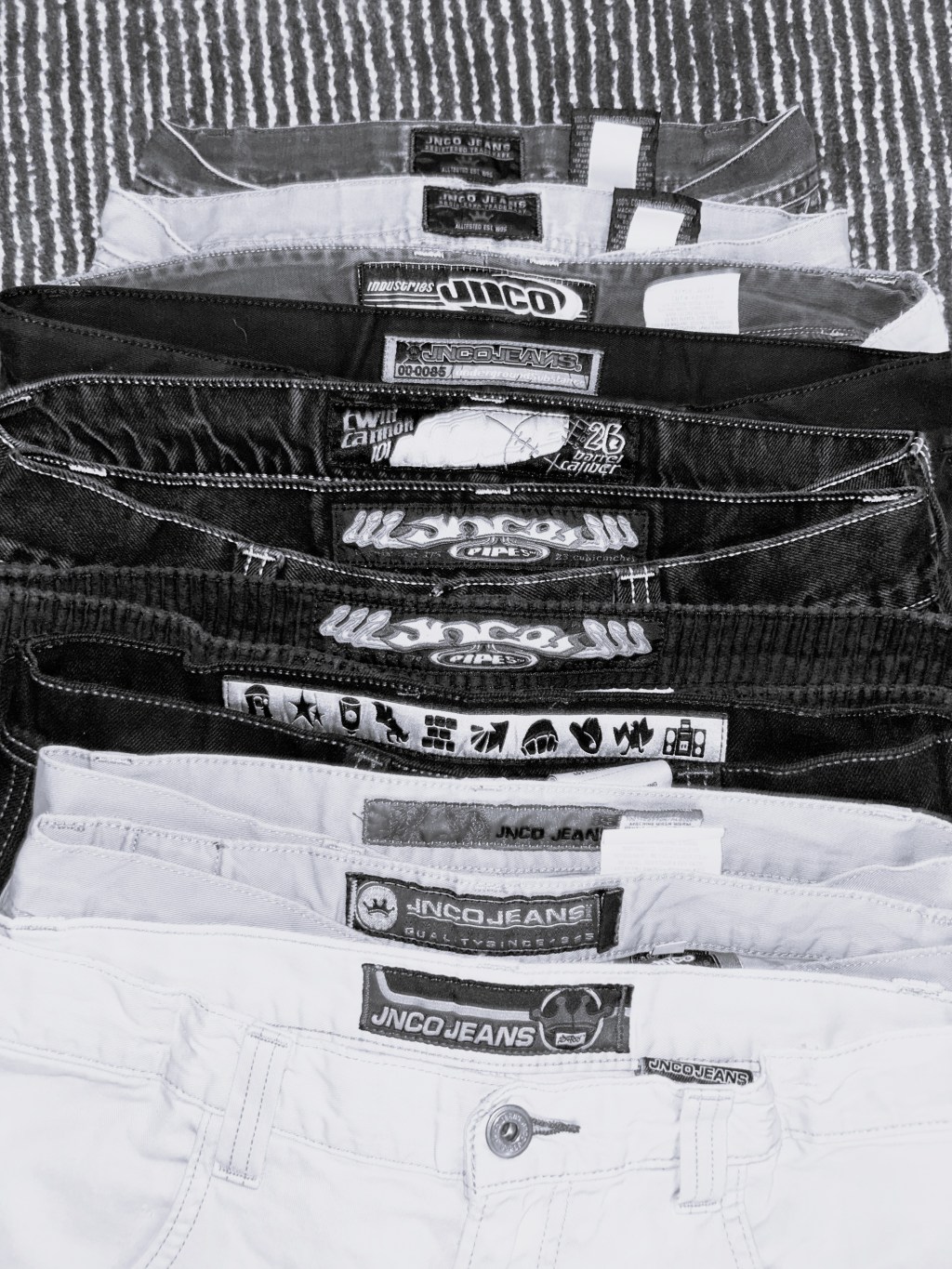
A few years ago, when I was exploring Beverly Bootstraps (a thrift shop in Beverly, Massachusetts) with my friends, I was introduced to what would soon become one of my favorite underground shoe brands: Feiyue. Priced at just $15, these kicks were both affordable and alternative, exactly the type of item thrift shoppers hope to find.
I visited the Bootstraps again last weekend, and despite rising prices in some stores, their prices remained low. I bought a pair of wide-leg green corduroys for just $8. But even so, thrifting isn’t what it used to be. Prices are creeping up, and the landscape of secondhand shopping is changing.
Historically, thrift stores have provided an affordable way to buy secondhand clothes while reducing waste. They allowed those who couldn’t afford high-end fashion to express themselves and contributed to sustainability by slowing down fast fashion. However, as demand for secondhand clothing grows, some thrift stores have raised their prices, making secondhand shopping less accessible than before.
Two major forces are driving the rise in thrift store prices: large-scale reselling and for-profit chains.
Online reselling platforms like Depop have incentivized people to use thrift stores as sourcing grounds for business. Resellers purchase large quantities of affordable items, then mark them up for a profit online. This makes it harder for low-income shoppers to find what they need. At the same time, corporate thrift chains like Savers have transformed secondhand shopping into a high-margin business, pricing donated clothes as if they were luxury goods.
At Oyster River High School (ORHS), some students have joined the reselling trend. Orson Woodall (’25) admits, “I’ll just buy clothes to sell them because I’m broke.” While thrift flipping may seem harmless, reselling on a larger scale can impact availability and pricing of items. As online marketplaces drive up demand, some thrift stores adjust their own prices to compete.
Givanni Macisso (’25) has seen this shift firsthand at the Goodwill Buy the Pound Store & Recycling Center (the Bins), where shoppers search through bulk clothing before it reaches retail stores. With resellers on the lookout for valuable pieces, the competition can be intense. “The people there are a different breed,” he says. “They will push you. They’re only aware of themselves and what they want.”
Reselling isn’t new. ORHS English teacher Shauna Horsley was a self-proclaimed “thrift flipper” back in the ‘90s, when secondhand clothes were a household norm. She remembers stuffing a paper bag full of thrifted items for just $1, then reworking them into new pieces to sell so she could buy concert tickets. “I would make bags and shirts and corduroys with patches,” she says.
Unlike today’s large-scale reselling culture, hers was focused on repurposing clothing rather than maximizing profit. Now, online platforms have popularized thrift reselling, leading to increased competition for sought-after items.
While resellers contribute to rising prices, they’re not the only factor. For-profit chains like Savers have also played a role in the secondhand clothing market. Unlike nonprofit stores like Salvation Army, which reinvests profits into community programs, Savers—whose inventory is donated—marks up its prices to align with retail standards.
I saw this firsthand when my friend Ellis Rodi (’27) and I visited Savers. His brother, Oliver Rodi (’25), immediately found a Golf Wang jacket—an exciting find for a fraction of its original cost. But on the same rack, Ellis stumbled upon something surprising: an O.J. Simpson jersey priced at $80. At a store that doesn’t pay for its inventory, such pricing raises questions about accessibility and affordability. Moments later, a search online revealed the same jersey selling for just $15 elsewhere.
Thrift store pricing is no longer about affordability, it reflects market competition. And the effects extend beyond local stores.
As thrift stores raise prices, lower-quality, unsellable clothing is increasingly discarded. Instead of being reused, these clothes pile up in landfills—or are shipped in bulk to developing countries, labeled as “charitable donations.”
According to CNN’s article “At one of the world’s largest clothing dumps, textiles are getting a new lease of life,” approximately 15 million garments arrive in Ghana weekly—most of them at Kantamanto, a major textile market for imported clothes. About 40% of these clothes will eventually become waste.
The article also notes that much of the clothing arrives in bales that are “mislabeled and filled with items in terrible condition.” Instead of being reused, these garments pollute waterways, harm the environment, and disrupt local economies. The influx of cheap, low-quality clothing makes it difficult for local textile workers and small businesses to compete.
Despite these challenges, there are still places where secondhand shopping stays true to its roots. Independent stores like the Echo Thrift Shop in Durham—just a twenty-minute walk from ORHS—offer an alternative to corporate thrift chains. These shops focus on curated, sustainable, and affordable fashion, maintaining the thrill of the find without turning secondhand shopping into a high-stakes market.
For Woodall, thrifting will always be an adventure. “It’s like the prolific act of sifting through berry bushes,” he says. “It’s like an animal digging through a carcass, trying to find the good organs to eat.”
—Ulysses Smith MOR
media courtesy of Orson Woodall


 Mouth of the River
Leave a Reply