

Artificial Intelligence (AI) is becoming an increasingly relevant topic in education, and Oyster River Cooperative School District (ORCSD) is stepping into the deep end.
The Oyster River school board reviewed the first draft of a policy aimed at defining the appropriate use of Generative AI in schools on Wednesday, November 5th. The draft is continuing to go through the process of becoming a policy.
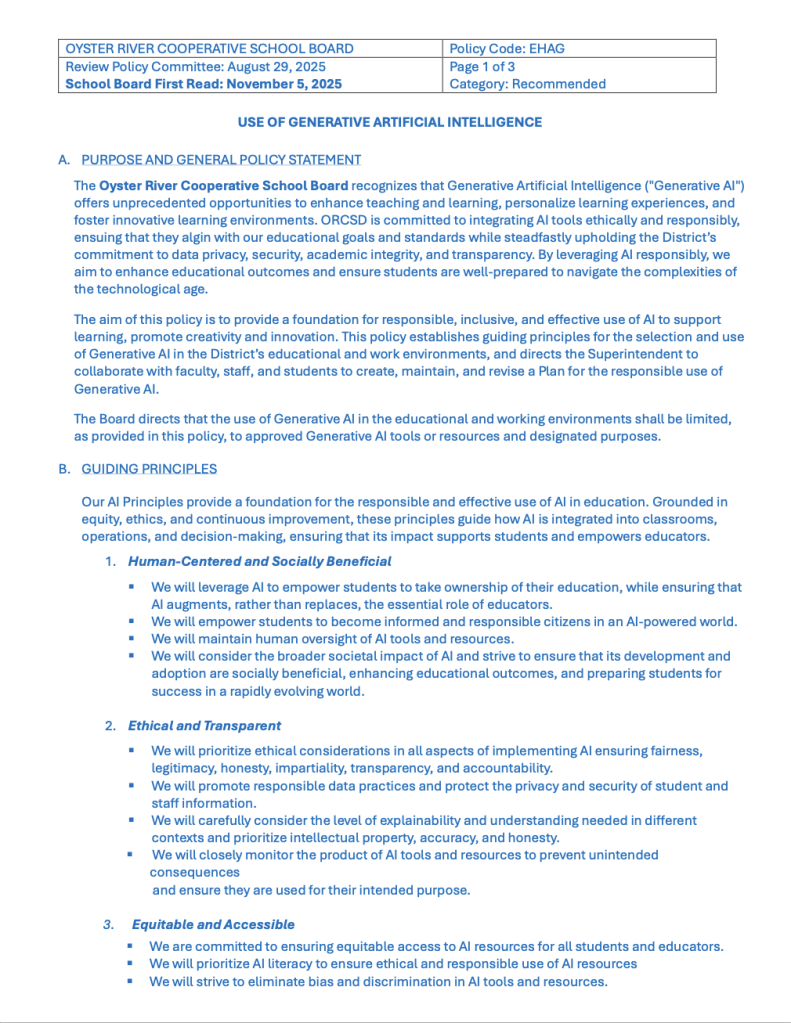
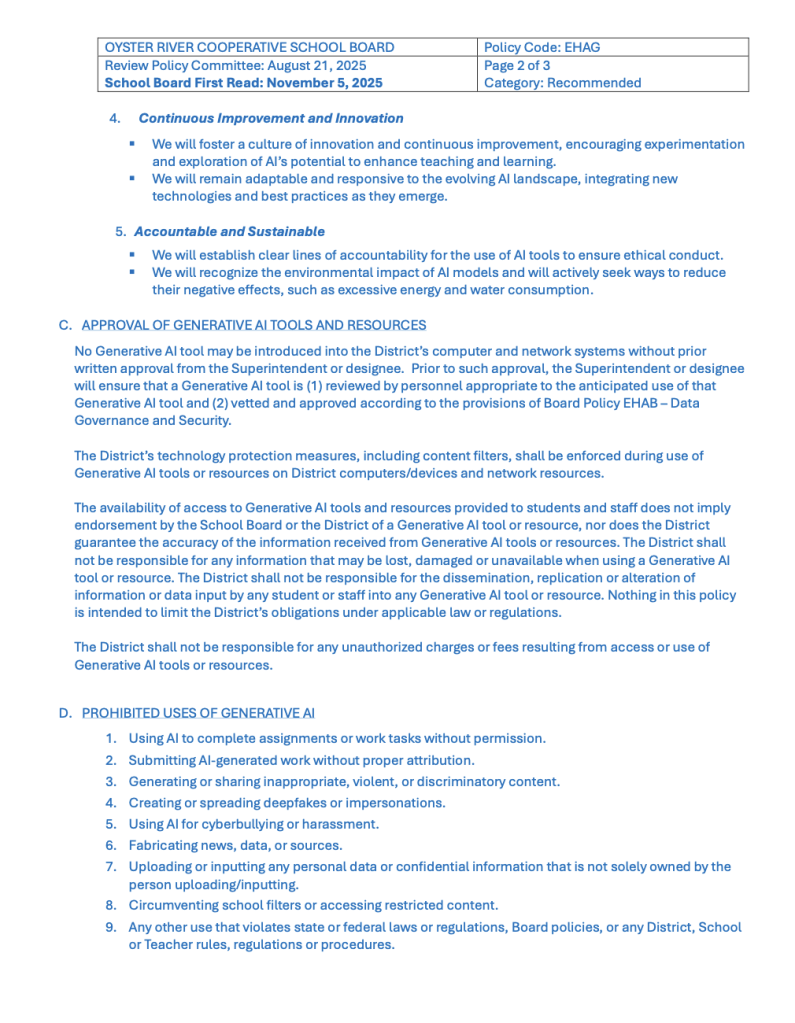
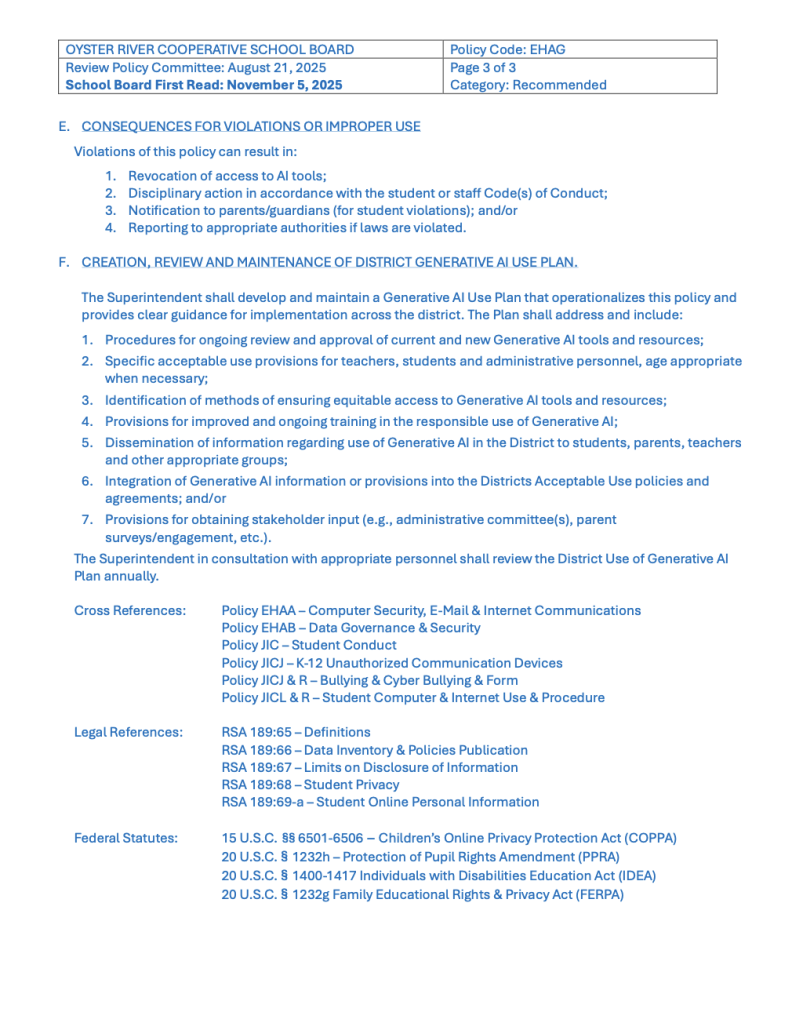
This policy, written by Superintendent Dr. Robert Shaps, introduces a set of guiding principles to serve as a blueprint for the integration of AI into the district and curriculum. It emphasizes the ethical and responsible use of Generative AI as a tool for learning, rather than a replacement.
Section B of the policy, titled ‘Guiding Principles’, states, “our AI Principles provide a foundation for the responsible and effective use of AI in education. Grounded in equity, ethics, and continuous improvement, these principles guide how AI is integrated into classrooms, operations, and decision-making, ensuring that its impact supports students and empowers educators.”
School board member and parent Kelly Ickes believes that the use of Generative AI is now a skill that will be necessary for students to navigate the world post-graduation. “Generative artificial intelligence is absolutely something that, in a safe and supportive environment, we need to teach our students [about].” She noted the importance of students understanding issues such as copyright infringement and learning how to approach AI ethically.
Social studies teacher Eden Suoth believes that more emphasis should be placed on conversations of whether or not we should integrate AI. “I think we need to put a little bit more thought into how this technology is going to change us. […] I think that often the conversations on whether or not we should adopt Al stops right at the point where it’s like, ‘well we need to prepare our kids to use it’. […] It’s a shame because I think we can continue talking about all these things.”
As it is a blueprint, the policy uses broad language so that it may be edited and built upon in the future. Shaps said, “we have to look at policy as a living document that’s going to evolve over time as we become familiar with what it means to integrate AI into learning.”
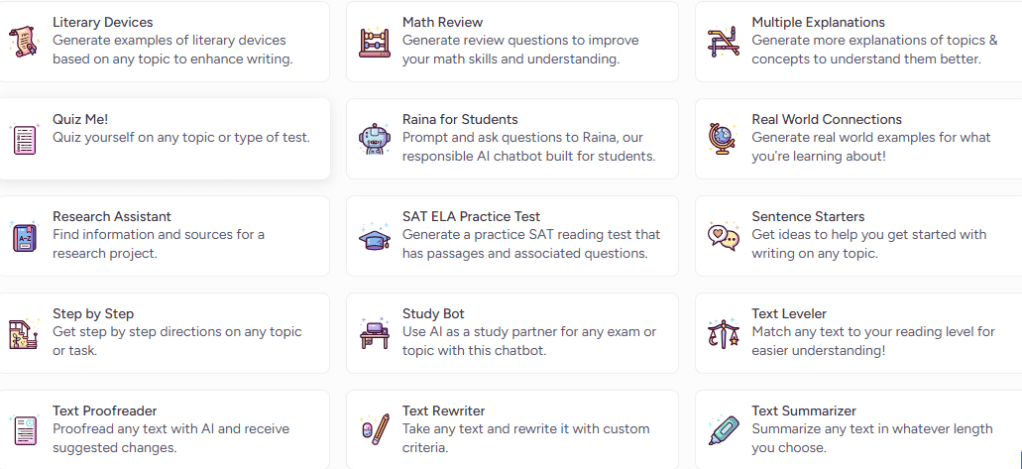
This policy comes as the district begins a pilot program with AI software. A group of students and staff at each building are testing a program called Magic School AI designed specifically for schools, with customizable features and restrictions. The goal is to eventually roll out a Generative AI resource for students and staff that would serve as a tool and part of curriculum.
Celeste Best, the high school Digital Learning Specialist, is overseeing the student and staff test groups in the high school, and said that their goal over the next few months will be to “see what [Magic School AI] will do and how it might help students, the same with teachers, and then in February, we’ll be discussing as a [district], if this is the best tool for Oyster River.”
Discussions continue around the policy and the integration of AI, as pilot groups will continue to meet district wide, and the policy will be brought back to the school board for a second read and approval on a later date.
Until then, the policy draft is available on the 2025-2026, 11/05/25 Regular Meeting Agenda (page 21) on the ORCSD website under the ‘School Board’ drop down menu, ‘Agendas and Minutes’ tab.
–Elise Bacon



 Mouth of the River
Leave a Reply