
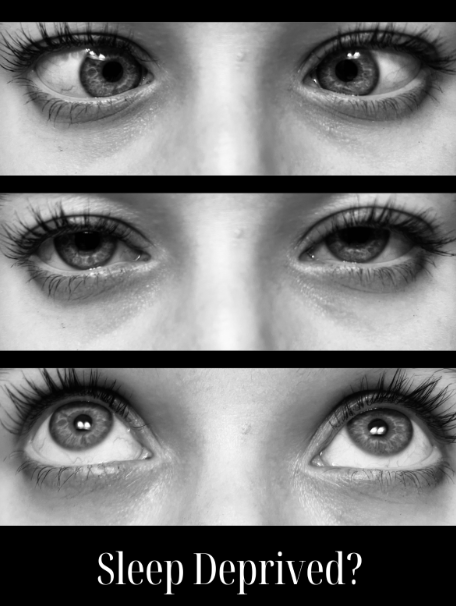
All too often I find myself in my first period class with my eyes unfocused, and my head drooping. I know that every morning I will wake up to my alarm, hit snooze five or six times, and eventually pull myself out of bed.
The issue of sleep deprivation has increased in prevalence over the past decade, and according to The Center of Disease Control Prevention (CDC) in a FastStats article: Sleep in High School Students, 84% of 12th grade students in America are getting insufficient sleep as of 2021, compared to 2011 when it was around 69%. The issue of teenagers being night owls is an age old one, however it seems that the issue has become worse since the 2010’s.
It’s clear that the long-standing habit f sleepless nights has stayed prevalent at Oyster River High School (ORHS). Even local coffee shops such as Breaking New Grounds have recently added ORHS Student discounts due to the massive popularity of their energy drinks. The underlying causes of this issue, as well as the long- and short-term ramifications, are extremely important for our generation’s adolescence to understand.
Hayden MacNeil (‘27) chronically struggles with sleep issues. According to Macneil, she will experience weeks or months where she consistently cannot sleep. “I’ll go to bed and I won’t be able to fall asleep. I’ll be staring at the ceiling for hours on end trying to get myself to [fall asleep], and a lot of time I just can’t. It definitely affects me during the day… it shows up in my schoolwork and athletic abilities.” There are several reasons why teens and young adults stay up late; the simplest one is that it is a biological mechanism.
According to an article published in the National Library of Medicine titled: Impact of sleep and circadian rhythms on addiction vulnerability in adolescents, at the time of transition to adulthood, there are large hormones fluctuations, brain reorganization, and rapid growth. Consistent and sufficient sleep is a pillar that supports all these occurrences. Sleep patterns are influenced by two internal biological components, a daily circadian rhythm, which is an internal clock that regulates the sleep wake cycle, and a homeostatic drive to sleep that builds up while awake, also called “sleep pressure.” Both components are affected by sex hormones such as estrogen and testosterone.
Although it’s widely believed that the late nights that teens are commonly subjected to are the results of workload, academics, media, and socializing, it’s more likely that the baseline cause is a biological shift in sleep structure through puberty. According to the National Library of Medicine, in a study conducted in 2011 titled: A cross-cultural comparison of sleep duration between US And Australian adolescents: the effect of school start time, parent-set bedtimes, and extracurricular load, the existence of “evening-type” behavior has been observed worldwide as early as the 20th century. A delay in the timing of sleep in adolescents from 12 years old to 20 has been observed in 20 countries and six continents across a range of cultures and governments. This delayed sleep means that the release of the sleep-regulating hormone melatonin does not typically release until 11:00 PM. This modern data overwhelmingly points to the conclusion that delayed sleep in teenagers is a natural occurrence internally influenced by hormones. This would also lead to the conclusion that the loss of sleep occurs in the morning, when teenagers wake up early for school.
There are other obvious influences over teenagers’ sleep patterns, such as a large academic workload. At ORHS there is quite a bit of academic pressure, especially considering the school’s standing as being in the top ten percent of schools in New Hampshire (NH) according to Public School Review. However, this is not isolated to ORHS by any means, as any academically motivated student at any school often sacrifices sleep for the sake of their work. It’s reported by Biology Insights that the average academically motivated high school student is spending 15 hours a week on homework, very often cutting into time that would be spent sleeping. The other obvious external factor is social media addiction, which can often make it hard to choose to go to sleep.
In recent developments it’s been observed that a unique combination of social media addiction, and a term coined as “revenge bedtime procrastination” can lead to even more intense sleep deprivation. “Revenge bedtime procrastination” is a term for the concept of trying to reclaim personal time that a large majority of people may lack due to being busy. After a long day without much time for yourself, you may find yourself collapsing on your bed exhausted, but you won’t go to sleep.
Instead, you spend time watching your favorite show, or more likely mindlessly scrolling for hours to de-stress.These external and internal factors affect many young adults and almost all teenagers, but the lack of sleep among our youth does not come without consequences. When you fall asleep, your brain is essentially resetting and restoring your body, giving you energy and making you ready for the next day.
Sleep is the time that several biological mechanisms are occurring. According to the Cleveland Clinic in an article titled Here’s What Happens When You Don’t Get Enough Sleep, sleep conserves and restores energy, repairs and recovers daily activities and injuries, and rests, reorganizes, and re-catalogs the brain. The average teen needs a minimum of eight hours, but the recommended amount is nine to ten hours. Even missing out on as little as an hour and a half of sleep has an immediate effect the next day.
Rob Quaglieri, a health teacher at ORHS, comments, “If you don’t get enough sleep, your brain can’t process all the stuff you have done each day, and you’re going to be losing things as you go through. Your brain is like a computer; it needs to reorganize itself; it needs to structure itself, and we do that when we sleep. You can be cramming all you want, but if you don’t have it organized in easy places to recall, it’s harder to use.” However, all it takes is one night’s sleep to get back on track.
Hannah Russell, one of ORHS’s psychologists’ comments, “A lot of students struggle with anxiety, depression, [and] stress. I think sometimes that can be related to sleep. [It’s] kind of a chicken or the egg type situation; the two are definitely closely connected. Everyone needs a different amount of sleep to feel their best, but teens who don’t get enough sleep usually report symptoms of that anxiety, depression, emotional dysregulation, things like that.” On the more concerning end of things, the long-term effects of adolescent sleep deprivation can be much more dangerous.
To cope with sleeplessness, it’s incredibly common to consume highly caffeinated drinks. At ORHS Red Bull Wednesday and the popularity of the Red Bull Lemonade drink served at Breaking New Grounds is its own indicator of the high consumption of caffeine and stimulants to keep the alertness throughout the day. Russell states, “[Energy drinks] give you a short little stimulant to better for a few hours, but then you’re probably tanking worse than you [would be] if you didn’t have it.” An overuse of caffeine stimulants can further interrupt sleep cycles and have physical consequences, Russell continues, “a lot of caffeine will raise your heart rate, which can lead to anxiety. It will interfere with your sleep cycles, so if you’re drinking it too late in the day, you’re not falling asleep, you’re sleeping later, you’re not getting enough sleep, you want an energy drink, it’s just a bad cycle.” Skylar Delage (‘26), comments on her energy drink consumption, “I love an Aroma Joes rush; I get one at least three times a week.” Companies like Red Bull and Aroma Joes can easily commodify the sleeplessness of high schoolers and college students, as it’s a large an easy market to pander too. Walking into Breaking New Grounds on any Wednesday of the school year I see at least a dozen familiar faces (myself included) getting their three-dollar Red Bull Lemonade.
The correlation between drug usage and sleep deprivation goes deeper. Chronic sleep loss and circadian misalignment have the potential to enhance developmental tendencies toward reward seeking behavior and impulsivity, according to the previously mentioned study: Impact of sleep and circadian rhythms on addiction vulnerability in adolescents. Reward sensitivity and impulsivity leave teens vulnerable to substance abuse.
Over the course of any one student’s high school career, as the workload gets heavier and the hours of sleep every night decrease, the insufficient sleep that might have been manageable as a younger student becomes chronic. According to the Child Mind Institute in an article titled Teens and Sleep: The Cost of Sleep Deprivation, you would begin to lack emotional regulation, upsetting easily and experiencing exaggerated mood swings, you would be fatigued so often that feeling sleepy would be the default, you would be at risk for symptoms of anxiety and depression, and any underlying mental illnesses could be triggered to a greater extent than they would be. All of this can culminate into permanent damage; this type of chronic sleeplessness can seriously affect a teenager’s memory and ability to retain information; it can also cause disorders, such as depression or insomnia.
It’s unfortunate that many of the situations and symptoms affiliated with sleep deprivation are likely relatable to any teenager reading this. It’s incredibly normal for teens to have very little sleep, and many teens are convinced that the lack of sleep is necessary and without much long-term consequence. However, it’s important that our adolescents are made aware of just how serious sleep deprivation can be.
In a study about the consequences of adolescent sleep deprivation, a quote from the National Library of Medicine states, “Sleep deprivation during adolescence may permanently alter the developmental trajectory of the brain and behavior. Despite this possibility, many modern social and technological features compel teenagers in developed countries to be overwhelmingly and chronically sleep deprived.”
So next time you find yourself up in the late hours of the night, or early hours of the morning, for any reason at all, remember that the health of your mind and body are important. So, remember to take a breath, close your eyes, and go to bed.
-Annie Graff




Leave a Reply