
At Oyster River High School (ORHS), trends spread fast. Whether it’s drinking a Red Bull Rush from Breaking New Grounds on Wednesday or playing hacky sack with your friends at lunch, it doesn’t take long for these trends to appear everywhere. Sometimes all it takes is hearing a single let ter or word for a brand to pop in your head. Maybe “N” makes you think of Nike, “S” reminds you of Starbucks or a product you saw on TikTok is impossible to forget.
I started wondering why certain names, logos, or products immediately came to mind. How do some brands feel unforgettable? Why is it that one word can trigger an image in our heads? Am I the only one making these connections, or are other people thinking the same thing? It might feel like a coincidence, but companies are counting on the fact that it isn’t.
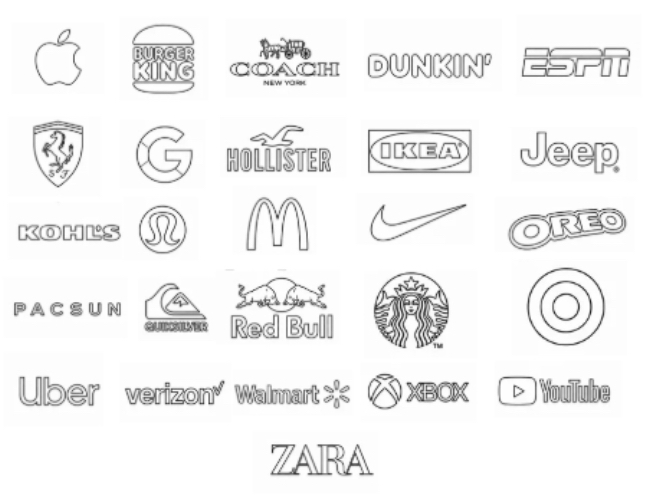
To better understand these sub conscious connections, I created a survey asking ORHS students to name a product or company they associate with each letter of the alphabet. The first few answers are common in everyday life: Apple, Burger King, Coach, Dunkin, ESPN. While I would have picked Apple like many others, Coca-Cola would have been my choice for C. These responses revealed patterns, suggesting that many students connect letters with similar brands, especially ones they frequently see. From logos and slogans to product names and social media campaigns, businesses rely on word associations. Word association is a cognitive process where one word triggers another image, memory, or idea. What seems like a simple mental short cut in our heads is actually a powerful psychological tool that businesses use every day to influence what we notice, remember, and ultimately buy.
For teenagers, understanding word associations can be surprisingly useful. High school students are constantly exposed to advertising through social media, streaming platforms, and online shopping. Whether students realize it or not, brands compete for attention every time someone scrolls through a feed. Through repeated slogans, hashtags, influencer sponsorships and even carefully chosen product names, companies build mental connections that make products feel familiar before teens have even tried them.
To understand why companies use this strategy, it helps to understand why our brains naturally connect words with images in the first place. While researching, I came across a study conducted in 2001 and I wanted ORHS students to try the same experiment. Below are two shapes: one rounded and one jagged. Now think about the words Bouba and Kiki. Which word feels like it belongs to each shape?
For me, I associated Bouba with the rounded shape and Kiki with the jagged shape. If you asked me why, I would say that it just felt right. That is the same for 71% of participants in the 2001 experiment . The participants overwhelmingly paired the soft-sounding word with the round shape and the sharper word with the spiky one, but why?
This phenomenon, often called the Bouba–Kiki effect, suggests that sounds and shapes are not processed separately in the brain. Instead, people instinctively connect with them. The consistent association between sounds and shapes stems from the physical characteristics of speech production and perception, according to “What Is the Bouba Kiki Effect and Why Does It Happen?”, an article posted by BiologyInsight. com. For example, when pronouncing “Bouba,” our lips naturally form a rounded shape, and the smooth, continuous flow of air aligns with the image of a soft, rounded object. In contrast the “Kiki” creates a sharp er, more abrupt sound that feels connected to jagged, spiky shapes.
Companies use word association to market products more effectively and appeal to their target audiences, shaping how we feel about a brand before we even try it. Softer sounds in a brand name may feel comforting or friendly, while sharper sounds can seem bold, energetic or edgy. For example, the energy drink Bang immediately suggests power and energy, while a happy meal from McDonalds emphasizes positivity and enjoyment. Through naming alone, companies can shape how we perceive a product and increase its appeal.
At ORHS, it is common for students to recognize brands through trends before ever purchasing the product. Take the NeeDoh for example. A small, squishy, colorful cube became a school wide sensation just from word of mouth. Or the water bottle epidemic, from Hydro Flask to a Stanley, to an Owala. Teens are constantly surrounded by branding and products designed to stay memorable.
“As consumers, this increases our odds of remembering the product, most likely talking about it more,” ORHS Speech Pathologist Nicole Richard explains, “and sometimes having the catchy slogan/song to be stuck in our heads.” She points to memorable marketing strategies like alliteration in company names such as Coca-Cola and PayPal, where repeated sounds make brands easier to remember.
These techniques often influence what products we would choose from when in an aisle full of different brands. Richard says, “personally, I am going to go with the one I have heard, and remember the brand name, over one I have not yet heard of.” Many ORHS students relate. Whether through Tik Tok, Instagram, YouTube, or recommendations from friends, teens are constantly introduced to products before seeing them in stores. Audrey Gompert (‘28) agrees, explaining how trends influence buying habits. “I think Labubus are ugly, but Pop Mart made millions due to their marketing and making it a trend.
For teenagers, this effect can be even stronger. Growing up surrounded by ads, branding, and social media, teens are constantly exposed to carefully crafted language designed to grab attention quickly. Platforms like Tik Tok and Instagram blur the line between entertainment and marketing, where products appear naturally in videos, “Get Ready with Me” posts or influencer recommendations. Gompert adds, “if your idol, or an influencer uses something on social media, it convinces teens to buy it too.”
Oliver Lehman (‘27) shared that while he avoids stores like Temu and Shein, he still discovers products through platforms like Instagram and sometimes buys items he sees there. This influence has only grown as platforms make buying easier through platforms like TikTok shop. Viewers can now move from watching content to purchasing products within seconds. A brand-new product seen repeatedly on social media can suddenly feel familiar, trustworthy or even necessary, simply because teens have encountered it so often.
Knowing this, I wanted to see if ORHS students connected the same companies or products with each letter of the alphabet, and whether these marketing strategies were actually working. I conducted a survey asking students what company or products they most associated with each letter, and the results revealed some clear patterns:
After my first few survey responses, I started to notice a pattern. Certain letters had overwhelmingly common answers, while others were more divided. But why did so many students think of the same brands?
Among others, Lehman chose Nike for the letter N. “Being a runner, the answer was straightforward,” Lehman says, “I think that if I was in different circles, or had different interests, then I would have known more brands.” Nike was the popular answer with 52.5% of people answering it. But what about the letters without a straightforward association, Gompert says, “It was hard for me to think of a company beginning with Y, but when I did, I was stuck with YouTube, Yeti, Yankee Candle or Yamaha. I went with YouTube because it was the most common answer to me.” Ten (43.4%) people picked YouTube followed by five (21.7%) people picking Yeti.
Even though I gathered all the common answers, some letters had stronger associations: A for Apple, G for Google, N for Nike, and Z for Zara. Others barely won or had around two to three people putting them as an answer: E for ESPN, J for Jeep, and O for Oreo. These answers show which brands make a more prominent feature in teen lives or have created a stronger marketing technique ending with a greater letter association. The strongest responses were usually the companies that ORHS students interact with regularly, whether through social media, sports, shopping, streaming platforms or everyday life.
At the same time, the survey also showed how personal interests shape brand recognition. Somone involved in sports, like Lehman, would answer with Nike, ESPN or Gatorade, while another student, Iris Skoglund (‘29), who likes shopping, would suggest brands like Brandy Melville, Free People, and Lululemon.
Both Lehman and Gompert agree that companies can use word association more effectively, but only if the product itself lives up to the hype. Lehman believes companies need to support strong branding with trust and reliability. Lehman says, “If you put a lot of money into something then companies need to back it up with statistics and user reviews.” Gompert agrees that companies should focus more on quality and transparency in advertising. “Sometimes when I watch ads, I wonder why companies don’t actually say what their product can do,” says Gompert. By using words like healthy, nutritional or clean, companies imprint an idea in the brain that their products are the best for customers.
For teens especially, branding can feel powerful because it appears everywhere. Students are exposed to advertisements while scrolling on social media, watching YouTube, listening to music, streaming shows, or even walking through stores after school. Over time, repeated exposure creates automatic associations between certain words, emotions, and brands. Even when a product isn’t objectively better, strong branding can make it feel like it is. A well-designed name, paired with the right words and associations, can give a company a major advantage in a crowded market. Through this lens, language becomes more than just communication; it becomes strategy.
What started as a question about why certain words feel connected to certain images revealed something much bigger: our brains are wired to make associations, and companies understand that. They use carefully chosen names, slogans, visuals, and sounds to shape what people remember and what they buy.
At ORHS, where trends can spread quickly and social media plays a major role in daily life, these effects may be stronger than students realize. So, the next time a brand name gets stuck in your head, or a product suddenly feels impossible to avoid, ask yourself: did you choose it, or did smart marketing help make the choice for you?
-Thea Smith




Leave a Reply